An effective online Science tutor for Class 9 should make difficult ideas understandable, help students practise independently and use school assessments to guide revision. The right plan follows the learner’s prescribed curriculum, current level and learning goals—not a generic promise of marks.
This guide explains how students and parents can organise learning and identify gaps. For live learning support, visit The Infinity live learning platform or The Infinity Home Tuitions.
Syllabus-aligned study plan

Review the current Class 9 Science syllabus, textbook, notes and recent assessments. Physics often involves quantities and relationships, Chemistry uses particle models and symbols, and Biology focuses on structures, functions and processes. A short diagnostic across all three areas shows where support is needed. Track concepts, diagrams, numerical work, practical skills and written answers. Avoid assuming every board follows the same chapter order.
Practice method: Start with a worked example or short model. Ask the learner to explain the idea in their own words, then complete a similar task without looking at the solution. Review the result against the question and identify the reason for any error. A correction is useful when the student can apply the corrected approach to a fresh example rather than copy the answer. Increase difficulty only after the core method is clear.
Progress check: Record the skill practised, level of independence, recurring mistake and next step. Revisit the skill after a few days to check retention. This gives the tutor and family evidence of progress and helps future lessons target actual gaps rather than repeat activities already mastered. Keep a short list of questions to bring to the next session.
Physics concepts and numericals

Connect definitions to observable situations before memorising formulas. Identify quantities, write known values, choose a relationship, show substitutions and include units. Label graphs and explain their meaning. When an answer is incorrect, determine whether the issue is concept understanding, formula selection, arithmetic or unit conversion. Ask the learner to solve a similar question independently after correction.
Practice method: Start with a worked example or short model. Ask the learner to explain the idea in their own words, then complete a similar task without looking at the solution. Review the result against the question and identify the reason for any error. A correction is useful when the student can apply the corrected approach to a fresh example rather than copy the answer. Increase difficulty only after the core method is clear.
Progress check: Record the skill practised, level of independence, recurring mistake and next step. Revisit the skill after a few days to check retention. This gives the tutor and family evidence of progress and helps future lessons target actual gaps rather than repeat activities already mastered. Keep a short list of questions to bring to the next session.
Chemistry and particle models

Use diagrams and examples to explain states of matter, mixtures, elements, compounds, atoms or molecules where included in the course. Practise symbols and formulas carefully. Connect separation methods to the properties they use. Only use safe, teacher-approved demonstrations; never mix unknown chemicals or conduct unsupervised experiments at home. Ask the learner to explain why a method or representation fits the question.
Practice method: Start with a worked example or short model. Ask the learner to explain the idea in their own words, then complete a similar task without looking at the solution. Review the result against the question and identify the reason for any error. A correction is useful when the student can apply the corrected approach to a fresh example rather than copy the answer. Increase difficulty only after the core method is clear.
Progress check: Record the skill practised, level of independence, recurring mistake and next step. Revisit the skill after a few days to check retention. This gives the tutor and family evidence of progress and helps future lessons target actual gaps rather than repeat activities already mastered. Keep a short list of questions to bring to the next session.
Biology, cells and processes
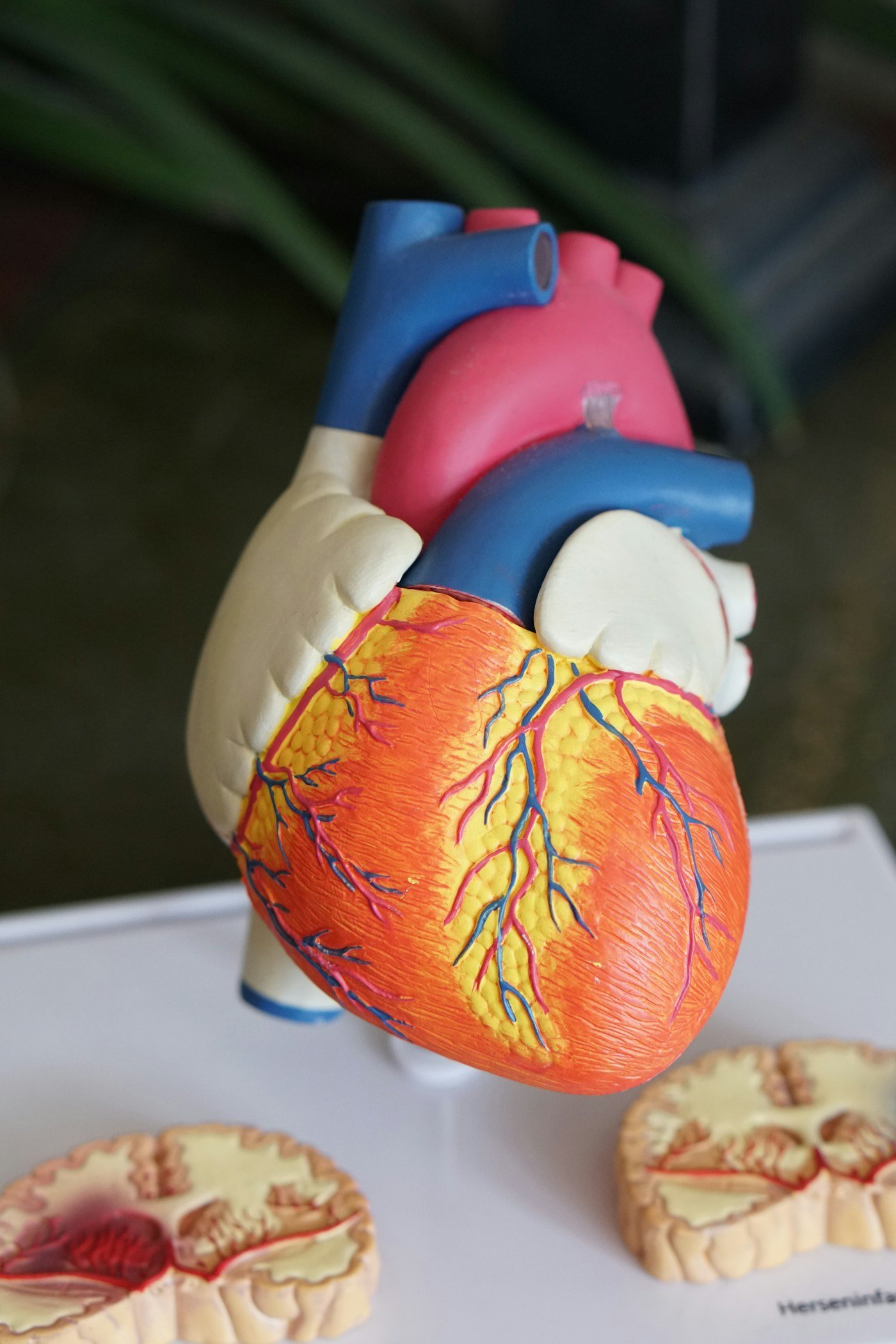
Connect biological structures with their functions. Use textbook diagrams to practise labels, then ask the learner to explain each part. For a process, create a flow chart showing the order of stages and how they relate. Build a glossary of technical terms with concise meanings. In written answers, naming a structure is not the same as explaining its function.
Practice method: Start with a worked example or short model. Ask the learner to explain the idea in their own words, then complete a similar task without looking at the solution. Review the result against the question and identify the reason for any error. A correction is useful when the student can apply the corrected approach to a fresh example rather than copy the answer. Increase difficulty only after the core method is clear.
Progress check: Record the skill practised, level of independence, recurring mistake and next step. Revisit the skill after a few days to check retention. This gives the tutor and family evidence of progress and helps future lessons target actual gaps rather than repeat activities already mastered. Keep a short list of questions to bring to the next session.
Scientific vocabulary and definitions

Create a glossary for terms that are easy to confuse, including a precise definition and short example. Practise recalling meanings without notes and using them in explanations. Students should practise defining, comparing, explaining and giving reasons at the right level of detail. Revisit a few terms throughout the week instead of copying a large glossary once.
Practice method: Start with a worked example or short model. Ask the learner to explain the idea in their own words, then complete a similar task without looking at the solution. Review the result against the question and identify the reason for any error. A correction is useful when the student can apply the corrected approach to a fresh example rather than copy the answer. Increase difficulty only after the core method is clear.
Progress check: Record the skill practised, level of independence, recurring mistake and next step. Revisit the skill after a few days to check retention. This gives the tutor and family evidence of progress and helps future lessons target actual gaps rather than repeat activities already mastered. Keep a short list of questions to bring to the next session.
Diagrams, graphs and data

Diagrams need clear labels and relevant details. Graph questions require students to inspect axes, units, scale and patterns before drawing conclusions. For tables, identify what each column represents and compare values carefully. Ask the learner to state the evidence supporting a conclusion. Correct one specific diagram or graph error at a time and explain why it matters.
Practice method: Start with a worked example or short model. Ask the learner to explain the idea in their own words, then complete a similar task without looking at the solution. Review the result against the question and identify the reason for any error. A correction is useful when the student can apply the corrected approach to a fresh example rather than copy the answer. Increase difficulty only after the core method is clear.
Progress check: Record the skill practised, level of independence, recurring mistake and next step. Revisit the skill after a few days to check retention. This gives the tutor and family evidence of progress and helps future lessons target actual gaps rather than repeat activities already mastered. Keep a short list of questions to bring to the next session.
Practical skills and safety
Practical work includes a question, method, observations and conclusion. Distinguish direct observation from inference. Follow school safety rules; never taste, directly inhale or mix unknown substances, and do not handle unknown organisms or perform unsafe experiments at home. If a practical is unavailable, use teacher-approved resources or supplied data. Never invent results.
Practice method: Start with a worked example or short model. Ask the learner to explain the idea in their own words, then complete a similar task without looking at the solution. Review the result against the question and identify the reason for any error. A correction is useful when the student can apply the corrected approach to a fresh example rather than copy the answer. Increase difficulty only after the core method is clear.
Progress check: Record the skill practised, level of independence, recurring mistake and next step. Revisit the skill after a few days to check retention. This gives the tutor and family evidence of progress and helps future lessons target actual gaps rather than repeat activities already mastered. Keep a short list of questions to bring to the next session.
Question-solving and written answers

Read the command word and identify the information provided. For numericals, show method and units; for explanations, state the principle and connect it to the situation; for diagrams, label relevant parts. Keep longer answers organised. After marking, classify the mistake, rewrite one answer and attempt a similar question independently. This turns feedback into learning.
Practice method: Start with a worked example or short model. Ask the learner to explain the idea in their own words, then complete a similar task without looking at the solution. Review the result against the question and identify the reason for any error. A correction is useful when the student can apply the corrected approach to a fresh example rather than copy the answer. Increase difficulty only after the core method is clear.
Progress check: Record the skill practised, level of independence, recurring mistake and next step. Revisit the skill after a few days to check retention. This gives the tutor and family evidence of progress and helps future lessons target actual gaps rather than repeat activities already mastered. Keep a short list of questions to bring to the next session.
Weekly revision and self-testing
Divide the week across Physics, Chemistry and Biology according to the syllabus and the student’s weakest areas. Include short concept reviews, problem solving, diagram recall and written practice. Close notes before attempting retrieval, then check and correct mistakes. Complete a mixed quiz at week’s end and revisit difficult items after a delay. Keep the timetable realistic alongside homework and rest.
Practice method: Start with a worked example or short model. Ask the learner to explain the idea in their own words, then complete a similar task without looking at the solution. Review the result against the question and identify the reason for any error. A correction is useful when the student can apply the corrected approach to a fresh example rather than copy the answer. Increase difficulty only after the core method is clear.
Progress check: Record the skill practised, level of independence, recurring mistake and next step. Revisit the skill after a few days to check retention. This gives the tutor and family evidence of progress and helps future lessons target actual gaps rather than repeat activities already mastered. Keep a short list of questions to bring to the next session.
Online tutoring and official resources

An effective online lesson includes a clear objective, visual explanation, student questions and independent practice. Share the syllabus, textbook and recent tests before sessions. Parents can track better reasoning, accurate diagrams and fewer repeated mistakes. For CBSE, consult the official CBSE website; other boards should be checked through their official resources. Explore The Infinity live learning platform and The Infinity Home Tuitions.
Practice method: Start with a worked example or short model. Ask the learner to explain the idea in their own words, then complete a similar task without looking at the solution. Review the result against the question and identify the reason for any error. A correction is useful when the student can apply the corrected approach to a fresh example rather than copy the answer. Increase difficulty only after the core method is clear.
Progress check: Record the skill practised, level of independence, recurring mistake and next step. Revisit the skill after a few days to check retention. This gives the tutor and family evidence of progress and helps future lessons target actual gaps rather than repeat activities already mastered. Keep a short list of questions to bring to the next session.
Revision checklist, FAQs and next steps
- Keep the current syllabus and textbook available.
- Write down questions that remain unclear during practice.
- Review errors and retry similar questions without notes.
- Practise regularly in short sessions instead of cramming.
- Agree on one measurable learning goal for the next lesson.
| Study area | Evidence of progress |
|---|---|
| Concepts | Explains ideas accurately in their own words |
| Practice | Completes new questions with less prompting |
| Revision | Corrects recurring mistakes and retains learning |
How often should students practise? Use manageable sessions that fit school workload. Can tutoring guarantee a particular grade? No responsible tutor can guarantee a result; outcomes depend on starting point, participation, practice and assessment requirements. Which syllabus should guide lessons? The prescribed course and school instructions should always take priority. For CBSE, consult the official CBSE website; other boards should use their official curriculum resources.
Explore The Infinity live learning or The Infinity Home Tuitions. A practical first step is to list three weak topics, gather related textbook questions and set a date to review progress.
Connect Science topics to evidence and everyday examples

Science concepts become easier to remember when learners connect a statement to evidence, a diagram or a familiar situation. For each topic, ask three questions: what is the idea, what observation or model supports it, and how could it be tested in a new question? Use examples that fit the syllabus and avoid unsafe experiments. When reading a practical description, distinguish the observation from the conclusion and explain how the evidence supports it. During revision, mix short explanations, diagrams, calculations and data interpretation so students practise selecting the right approach. Keep a record of misconceptions and revisit them after a few days. Parents can ask the student to teach back one idea in their own words. If the explanation is unclear, return to the textbook diagram or a simpler example and build up again. The goal is dependable understanding, not simply finishing the chapter.
Use this approach alongside the school’s own assignments and feedback. Keep the routine realistic, review mistakes without blame and adjust the next task to the learner’s current level. A good tutor explains the reasoning, checks independent application and communicates the next learning goal clearly.
After each practice quiz, separate mistakes into concept gaps, missed instructions, calculation or labelling errors, and incomplete written answers. Each type needs a different response: revisit the concept, practise reading the question, redo the calculation carefully, or improve answer structure. Keep the error log short enough to review before the next lesson. Students should also practise explaining one answer aloud without notes. If they cannot explain why it is correct, return to the textbook diagram, worked example or teacher-approved resource and rebuild the explanation before attempting another question.