An effective online Mathematics tutor for Class 9 should make difficult ideas understandable, help students practise independently and use school assessments to guide revision. The right plan follows the learner’s prescribed curriculum, current level and learning goals—not a generic promise of marks.
This guide explains how students and parents can organise learning and identify gaps. For live learning support, visit The Infinity live learning platform or The Infinity Home Tuitions.
Diagnose learning gaps

Review the syllabus, textbook, notebook and recent tests. Ask the learner to solve a mix of questions and explain each step. This reveals whether the main gap is arithmetic fluency, algebra, geometry, word-problem interpretation or pacing. Track secure and developing skills, and prioritise the topics the school actually teaches. Lessons should be based on evidence from errors rather than assuming every student needs the same sequence.
Practice method: Start with a worked example or short model. Ask the learner to explain the idea in their own words, then complete a similar task without looking at the solution. Review the result against the question and identify the reason for any error. A correction is useful when the student can apply the corrected approach to a fresh example rather than copy the answer. Increase difficulty only after the core method is clear.
Progress check: Record the skill practised, level of independence, recurring mistake and next step. Revisit the skill after a few days to check retention. This gives the tutor and family evidence of progress and helps future lessons target actual gaps rather than repeat activities already mastered. Keep a short list of questions to bring to the next session.
Number systems
Use number lines and examples to distinguish number types and understand their relationships. Practise comparing values, representing numbers and simplifying expressions with the prescribed rules. For exponents or surds where included, write each transformation clearly and identify the property used. Check whether the result is reasonable. If an answer is wrong, locate the exact step where a rule was misapplied rather than repeating the whole solution.
Practice method: Start with a worked example or short model. Ask the learner to explain the idea in their own words, then complete a similar task without looking at the solution. Review the result against the question and identify the reason for any error. A correction is useful when the student can apply the corrected approach to a fresh example rather than copy the answer. Increase difficulty only after the core method is clear.
Progress check: Record the skill practised, level of independence, recurring mistake and next step. Revisit the skill after a few days to check retention. This gives the tutor and family evidence of progress and helps future lessons target actual gaps rather than repeat activities already mastered. Keep a short list of questions to bring to the next session.
Algebraic expressions and identities

Keep like terms organised and write one transformation per line. Practise expanding brackets, simplifying expressions and using identities required by the syllabus. Check signs carefully and explain why each step is valid. Common errors include combining unlike terms or applying a rule to only part of an expression. Move from a worked example to guided practice and then an independent problem.
Practice method: Start with a worked example or short model. Ask the learner to explain the idea in their own words, then complete a similar task without looking at the solution. Review the result against the question and identify the reason for any error. A correction is useful when the student can apply the corrected approach to a fresh example rather than copy the answer. Increase difficulty only after the core method is clear.
Progress check: Record the skill practised, level of independence, recurring mistake and next step. Revisit the skill after a few days to check retention. This gives the tutor and family evidence of progress and helps future lessons target actual gaps rather than repeat activities already mastered. Keep a short list of questions to bring to the next session.
Linear equations and word problems

Translate a word problem into mathematics before solving it. Identify the unknown, define a variable, express the relationships and form an equation. Solve step by step and substitute the result into the original situation. Read carefully for units and conditions. If the equation is wrong, return to the translation stage instead of manipulating an incorrect equation. This develops a systematic method for unfamiliar questions.
Practice method: Start with a worked example or short model. Ask the learner to explain the idea in their own words, then complete a similar task without looking at the solution. Review the result against the question and identify the reason for any error. A correction is useful when the student can apply the corrected approach to a fresh example rather than copy the answer. Increase difficulty only after the core method is clear.
Progress check: Record the skill practised, level of independence, recurring mistake and next step. Revisit the skill after a few days to check retention. This gives the tutor and family evidence of progress and helps future lessons target actual gaps rather than repeat activities already mastered. Keep a short list of questions to bring to the next session.
Geometry and proofs

Identify the given information, the statement to prove and the definitions or theorems that may apply. Mark the diagram carefully but do not assume appearance proves a relationship. Write each step with a reason where required. Explain why a theorem fits the situation and distinguish known facts from the conclusion. If a proof stalls, list what is known and what must be shown, then look for a connection.
Practice method: Start with a worked example or short model. Ask the learner to explain the idea in their own words, then complete a similar task without looking at the solution. Review the result against the question and identify the reason for any error. A correction is useful when the student can apply the corrected approach to a fresh example rather than copy the answer. Increase difficulty only after the core method is clear.
Progress check: Record the skill practised, level of independence, recurring mistake and next step. Revisit the skill after a few days to check retention. This gives the tutor and family evidence of progress and helps future lessons target actual gaps rather than repeat activities already mastered. Keep a short list of questions to bring to the next session.
Coordinate geometry and graphs

Read axes, scales and coordinates carefully. Practise plotting points, identifying quadrants and interpreting graphs using the course terminology. Check point placement and axis scales. When interpreting a graph, describe the relationship it shows rather than merely naming a point. Clear labels and accurate plotting matter, so keep diagrams uncluttered and ensure the response answers the question.
Practice method: Start with a worked example or short model. Ask the learner to explain the idea in their own words, then complete a similar task without looking at the solution. Review the result against the question and identify the reason for any error. A correction is useful when the student can apply the corrected approach to a fresh example rather than copy the answer. Increase difficulty only after the core method is clear.
Progress check: Record the skill practised, level of independence, recurring mistake and next step. Revisit the skill after a few days to check retention. This gives the tutor and family evidence of progress and helps future lessons target actual gaps rather than repeat activities already mastered. Keep a short list of questions to bring to the next session.
Mensuration and formulas

Identify the shape, draw a labelled diagram and select the formula that matches the quantity asked for. Distinguish perimeter, area and volume, convert units where needed and show substitutions. Check whether the result is plausible. Memorising a formula without knowing what it measures can lead to using an area formula for a perimeter question. A formula sheet should be followed by practice without notes.
Practice method: Start with a worked example or short model. Ask the learner to explain the idea in their own words, then complete a similar task without looking at the solution. Review the result against the question and identify the reason for any error. A correction is useful when the student can apply the corrected approach to a fresh example rather than copy the answer. Increase difficulty only after the core method is clear.
Progress check: Record the skill practised, level of independence, recurring mistake and next step. Revisit the skill after a few days to check retention. This gives the tutor and family evidence of progress and helps future lessons target actual gaps rather than repeat activities already mastered. Keep a short list of questions to bring to the next session.
Statistics and data interpretation

Read tables, frequency information and graphs carefully before calculating. Identify what each column or axis represents and check totals where relevant. Show working for summary measures taught in the course and state what the result means. For probability where included, define possible outcomes and the event before calculating. Follow the prescribed syllabus for which statistical methods are required.
Practice method: Start with a worked example or short model. Ask the learner to explain the idea in their own words, then complete a similar task without looking at the solution. Review the result against the question and identify the reason for any error. A correction is useful when the student can apply the corrected approach to a fresh example rather than copy the answer. Increase difficulty only after the core method is clear.
Progress check: Record the skill practised, level of independence, recurring mistake and next step. Revisit the skill after a few days to check retention. This gives the tutor and family evidence of progress and helps future lessons target actual gaps rather than repeat activities already mastered. Keep a short list of questions to bring to the next session.
Error correction and exam technique

Read the task, identify known information, choose a method, show the steps and check the result. If an answer is wrong, classify it as a concept gap, rule misuse, sign error, calculation mistake or misread condition. Keep an error log and solve a parallel problem after correction. During mixed practice, learn to choose the method without topic labels. Introduce timing after accuracy improves.
Practice method: Start with a worked example or short model. Ask the learner to explain the idea in their own words, then complete a similar task without looking at the solution. Review the result against the question and identify the reason for any error. A correction is useful when the student can apply the corrected approach to a fresh example rather than copy the answer. Increase difficulty only after the core method is clear.
Progress check: Record the skill practised, level of independence, recurring mistake and next step. Revisit the skill after a few days to check retention. This gives the tutor and family evidence of progress and helps future lessons target actual gaps rather than repeat activities already mastered. Keep a short list of questions to bring to the next session.
Online tutoring and progress checks

A useful online lesson makes each step visible and asks the learner to do the mathematics. The tutor can annotate an example, then let the student solve a parallel question independently. Share the textbook, chapter and recent mistakes before sessions. Parents can track clearer working and fewer repeated errors. For CBSE information, consult the official CBSE website. Explore The Infinity live learning platform and The Infinity Home Tuitions.
Practice method: Start with a worked example or short model. Ask the learner to explain the idea in their own words, then complete a similar task without looking at the solution. Review the result against the question and identify the reason for any error. A correction is useful when the student can apply the corrected approach to a fresh example rather than copy the answer. Increase difficulty only after the core method is clear.
Progress check: Record the skill practised, level of independence, recurring mistake and next step. Revisit the skill after a few days to check retention. This gives the tutor and family evidence of progress and helps future lessons target actual gaps rather than repeat activities already mastered. Keep a short list of questions to bring to the next session.
Revision checklist, FAQs and next steps
- Keep the current syllabus and textbook available.
- Write down questions that remain unclear during practice.
- Review errors and retry similar questions without notes.
- Practise regularly in short sessions instead of cramming.
- Agree on one measurable learning goal for the next lesson.
| Study area | Evidence of progress |
|---|---|
| Concepts | Explains ideas accurately in their own words |
| Practice | Completes new questions with less prompting |
| Revision | Corrects recurring mistakes and retains learning |
How often should students practise? Use manageable sessions that fit school workload. Can tutoring guarantee a particular grade? No responsible tutor can guarantee a result; outcomes depend on starting point, participation, practice and assessment requirements. Which syllabus should guide lessons? The prescribed course and school instructions should always take priority. For CBSE, consult the official CBSE website; other boards should use their official curriculum resources.
Explore The Infinity live learning or The Infinity Home Tuitions. A practical first step is to list three weak topics, gather related textbook questions and set a date to review progress.
Build confidence through deliberate Mathematics practice
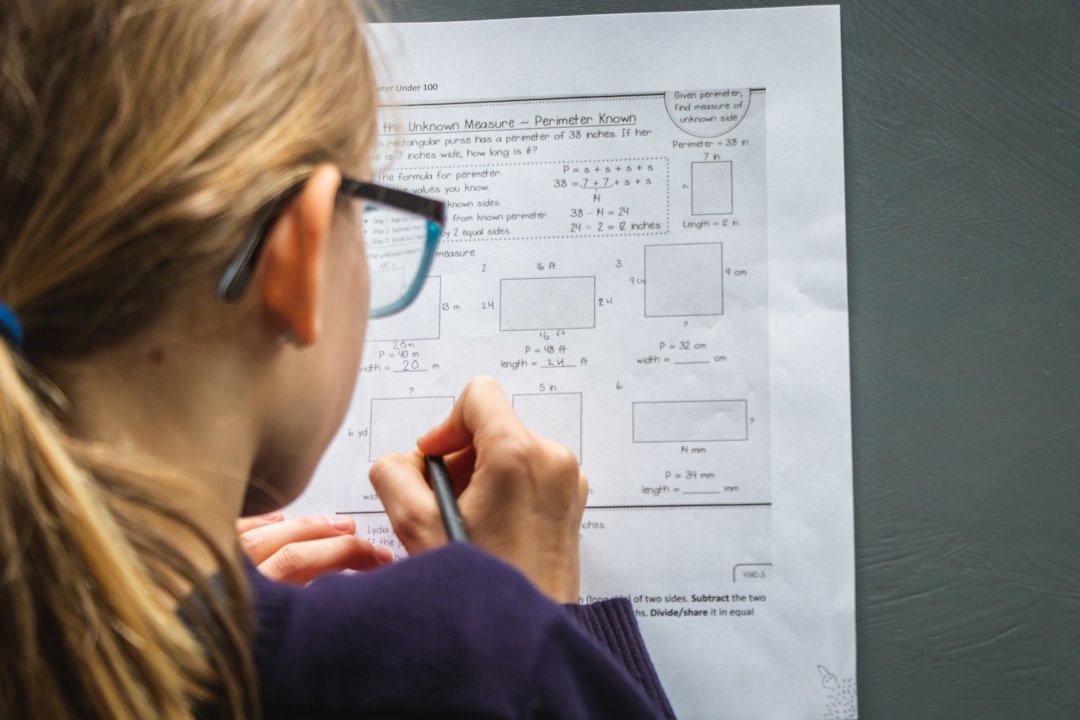
Confidence in Mathematics grows when practice is deliberate and feedback is specific. Choose a small set of questions that target one skill, solve them without looking at worked answers and check the method as well as the final result. If a solution is incorrect, identify the first incorrect step. Was the question translated into the wrong equation? Was a sign copied incorrectly? Was a theorem applied without checking its conditions? Correct that step and solve a parallel problem from scratch. Keep a notebook of recurring errors and review it before tests. Mix familiar and new question types once the method is understood, because mixed practice teaches students to select an approach independently. Avoid measuring progress only by speed; accuracy, clear working and the ability to explain a method are stronger foundations. A tutor should gradually reduce prompts so the learner becomes less dependent on hints.
Use this approach alongside the school’s own assignments and feedback. Keep the routine realistic, review mistakes without blame and adjust the next task to the learner’s current level. A good tutor explains the reasoning, checks independent application and communicates the next learning goal clearly.