An effective online Physics tutor for Class 9 should make difficult ideas understandable, help students practise independently and use school assessments to guide revision. The right plan follows the learner’s prescribed curriculum, current level and learning goals—not a generic promise of marks.
This guide explains how students and parents can organise learning, identify gaps and use online lessons productively. For live learning support, visit The Infinity live learning platform or explore The Infinity Home Tuitions.
Syllabus mapping and diagnostic assessment
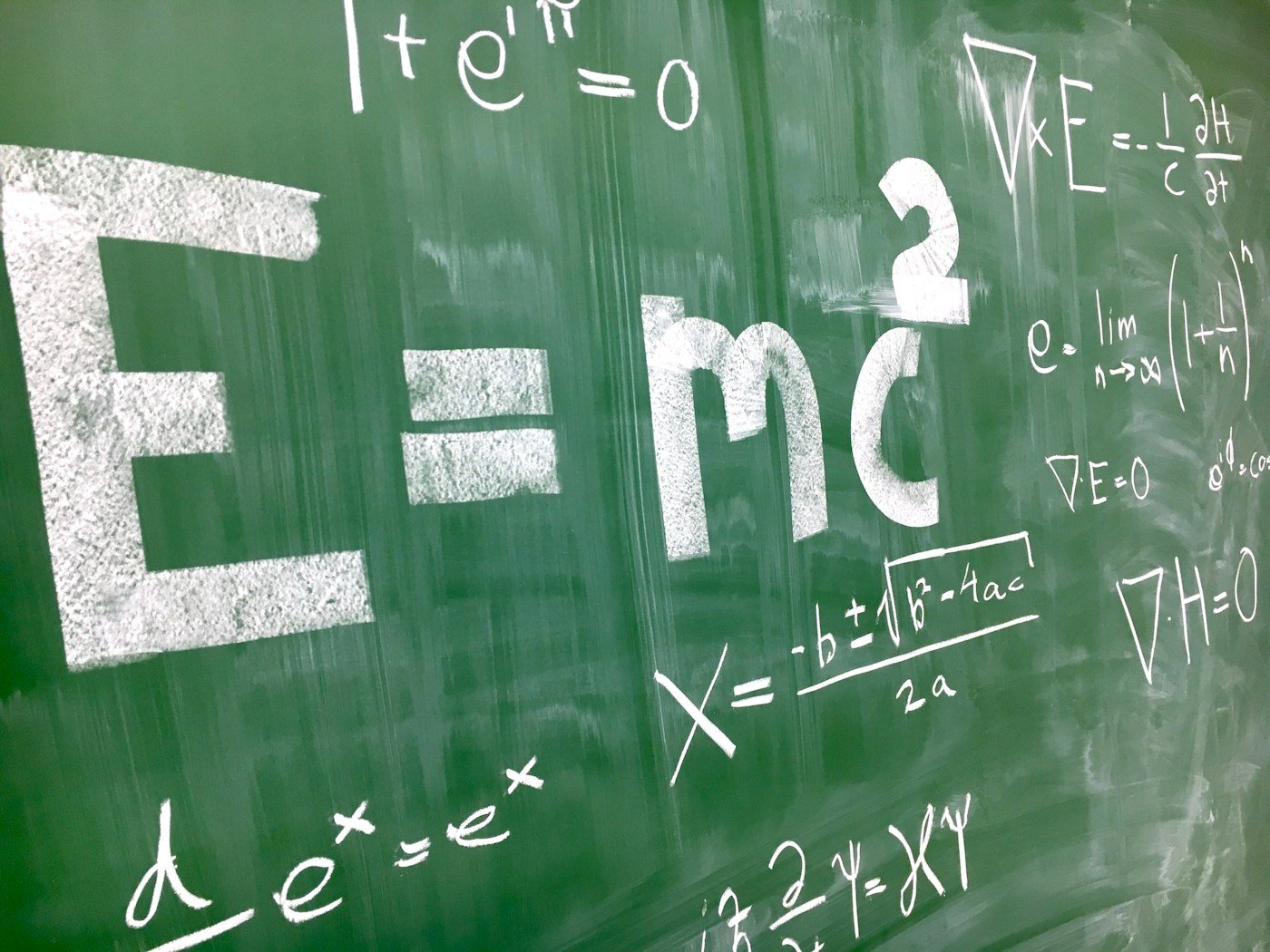
Start with the current school syllabus, textbook, class notes and recent tests. Class 9 Physics topics and their order can vary by board, so confirm the course rather than assuming one generic sequence. Ask the learner to explain a familiar concept, interpret a simple graph and solve a representative numerical. This reveals whether the main gap is conceptual understanding, formula selection, units, arithmetic or reading the question. Record secure, developing and not-yet-understood topics in a tracker, then revisit it every few weeks. The aim is to build a plan from evidence, not simply race through chapters.
Practice method: Begin with a worked example or short model. Ask the learner to explain the idea in their own words, then complete a similar task without looking at the solution. Review the result against the question and identify the precise reason for any error. A correction becomes useful when the student can apply the corrected approach to a fresh example rather than simply copying the answer. Increase difficulty only after the core method is clear.
Progress check: Record the skill practised, the level of independence, the most common mistake and one next step. Revisit the same skill after a few days to check retention. This gives the tutor and family practical evidence of progress and helps future lessons target actual gaps instead of repeating activities the student has already mastered. Students should also keep a short list of questions to bring to the next session.
Motion, measurement and graphs

Connect distance, displacement, speed, velocity and acceleration to everyday movement. Before using an equation, identify what each quantity means and check the units. For a numerical, list known values, state what is required, select the appropriate relationship, substitute carefully and write the unit with the answer. For graphs, inspect the axes and scale first, then explain what the line or slope represents at the level taught in the course. Students should draw a graph from a small data set and describe its meaning in words. This builds interpretation skills beyond memorising formulas.
Practice method: Begin with a worked example or short model. Ask the learner to explain the idea in their own words, then complete a similar task without looking at the solution. Review the result against the question and identify the precise reason for any error. A correction becomes useful when the student can apply the corrected approach to a fresh example rather than simply copying the answer. Increase difficulty only after the core method is clear.
Progress check: Record the skill practised, the level of independence, the most common mistake and one next step. Revisit the same skill after a few days to check retention. This gives the tutor and family practical evidence of progress and helps future lessons target actual gaps instead of repeating activities the student has already mastered. Students should also keep a short list of questions to bring to the next session.
Force and laws of motion

Use familiar examples such as pushing a trolley, catching a ball or passengers moving when a vehicle changes speed. Ask learners to identify the object, the force or forces acting on it, and the change in motion. Distinguish mass from weight and use diagrams to make the relationships clear. When studying Newton’s laws, practise both the statement and its application to a new situation. A strong written answer names the principle, links it to the evidence and states the conclusion. Avoid learning laws as isolated sentences without understanding where they apply.
Practice method: Begin with a worked example or short model. Ask the learner to explain the idea in their own words, then complete a similar task without looking at the solution. Review the result against the question and identify the precise reason for any error. A correction becomes useful when the student can apply the corrected approach to a fresh example rather than simply copying the answer. Increase difficulty only after the core method is clear.
Progress check: Record the skill practised, the level of independence, the most common mistake and one next step. Revisit the same skill after a few days to check retention. This gives the tutor and family practical evidence of progress and helps future lessons target actual gaps instead of repeating activities the student has already mastered. Students should also keep a short list of questions to bring to the next session.
Gravitation and pressure
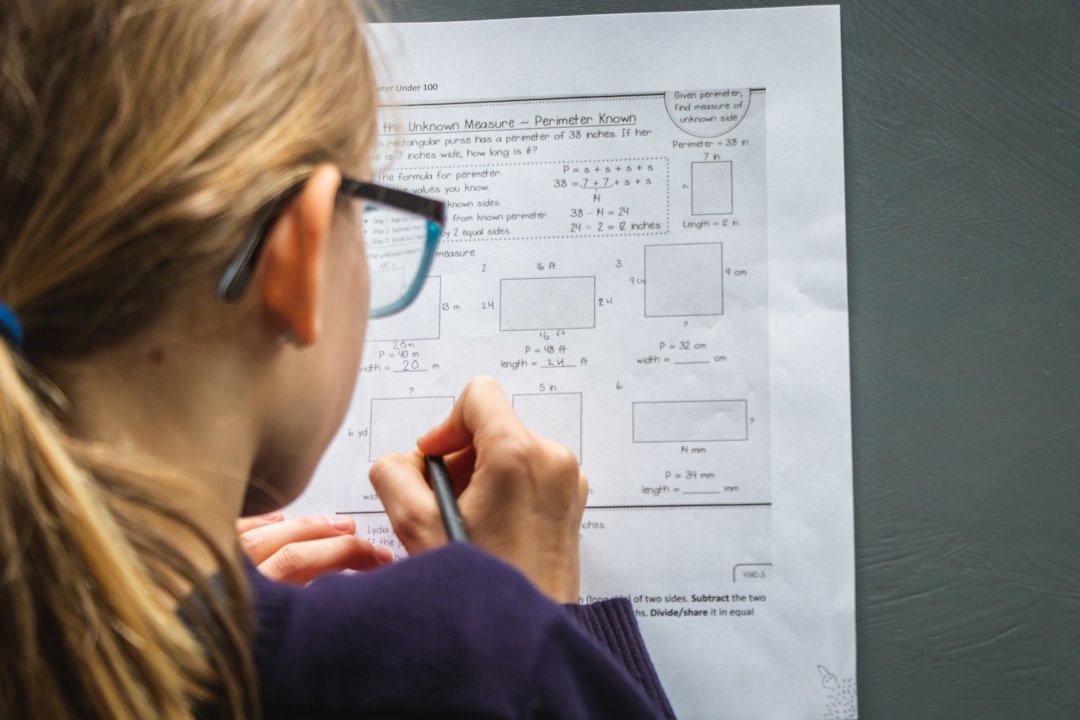
Explain gravitational attraction, mass and weight as related but distinct ideas. Use labelled diagrams and simple comparisons to ask what remains constant and what may change when gravitational field strength changes. For calculations, identify the quantities and units before substituting values. Where pressure or buoyancy is included, connect the equation to the physical meaning of each variable and interpret the result in a sentence. The learner should explain why a method fits a question rather than only recalling a formula. Keep the depth aligned with the prescribed Class 9 textbook.
Practice method: Begin with a worked example or short model. Ask the learner to explain the idea in their own words, then complete a similar task without looking at the solution. Review the result against the question and identify the precise reason for any error. A correction becomes useful when the student can apply the corrected approach to a fresh example rather than simply copying the answer. Increase difficulty only after the core method is clear.
Progress check: Record the skill practised, the level of independence, the most common mistake and one next step. Revisit the same skill after a few days to check retention. This gives the tutor and family practical evidence of progress and helps future lessons target actual gaps instead of repeating activities the student has already mastered. Students should also keep a short list of questions to bring to the next session.
Work, energy and power

Use examples such as lifting a schoolbag, pushing an object that does not move, or observing a moving object slow down to distinguish scientific work from everyday effort. Link kinetic and potential energy to situations students can picture, then practise explaining energy transformations. For calculations, write the formula, substitute values with units and check whether the result is plausible. If power is part of the course, relate it to the rate of doing work and compare two simple cases. Students should explain the concept in their own words instead of relying on formula recall alone.
Practice method: Begin with a worked example or short model. Ask the learner to explain the idea in their own words, then complete a similar task without looking at the solution. Review the result against the question and identify the precise reason for any error. A correction becomes useful when the student can apply the corrected approach to a fresh example rather than simply copying the answer. Increase difficulty only after the core method is clear.
Progress check: Record the skill practised, the level of independence, the most common mistake and one next step. Revisit the same skill after a few days to check retention. This gives the tutor and family practical evidence of progress and helps future lessons target actual gaps instead of repeating activities the student has already mastered. Students should also keep a short list of questions to bring to the next session.
Sound and wave concepts

Introduce sound through vibration and the way sound travels through a medium. Use labelled wave sketches to distinguish frequency, amplitude and time period. Ask learners to compare two diagrams and explain what a changed feature means for the sound. Clarify the difference between pitch and loudness and address misconceptions such as sound travelling through a vacuum. Practise numerical relationships only where they appear in the course. Short questions should require the learner to connect an observation with the relevant principle, rather than copy a memorised definition.
Practice method: Begin with a worked example or short model. Ask the learner to explain the idea in their own words, then complete a similar task without looking at the solution. Review the result against the question and identify the precise reason for any error. A correction becomes useful when the student can apply the corrected approach to a fresh example rather than simply copying the answer. Increase difficulty only after the core method is clear.
Progress check: Record the skill practised, the level of independence, the most common mistake and one next step. Revisit the same skill after a few days to check retention. This gives the tutor and family practical evidence of progress and helps future lessons target actual gaps instead of repeating activities the student has already mastered. Students should also keep a short list of questions to bring to the next session.
Practical work and scientific observation
For each prescribed practical, record the aim, materials, method, observations and conclusion in the school’s required format. Distinguish what was actually observed from what is inferred, and never invent results to fit an expected answer. Label diagrams clearly and include only relevant details. Follow teacher instructions and safety rules; do not conduct risky experiments at home. If a practical is unavailable, use teacher-approved demonstrations or supplied data and practise interpreting the evidence. A tutor should explain the reasoning behind a method, not merely dictate a notebook entry.
Practice method: Begin with a worked example or short model. Ask the learner to explain the idea in their own words, then complete a similar task without looking at the solution. Review the result against the question and identify the precise reason for any error. A correction becomes useful when the student can apply the corrected approach to a fresh example rather than simply copying the answer. Increase difficulty only after the core method is clear.
Progress check: Record the skill practised, the level of independence, the most common mistake and one next step. Revisit the same skill after a few days to check retention. This gives the tutor and family practical evidence of progress and helps future lessons target actual gaps instead of repeating activities the student has already mastered. Students should also keep a short list of questions to bring to the next session.
Numerical problem-solving and error correction

Use a repeatable routine: read the question, underline the required quantity, list known values, convert units if needed, choose a formula, show substitutions and check the result. When an answer is wrong, classify the error as conceptual, algebraic, arithmetic, unit-related or caused by misreading. Keep a short error log and solve a parallel question after correcting the first. This is more effective than copying the correct solution and moving on. As confidence grows, mix questions from different topics so the learner practises choosing a method independently.
Practice method: Begin with a worked example or short model. Ask the learner to explain the idea in their own words, then complete a similar task without looking at the solution. Review the result against the question and identify the precise reason for any error. A correction becomes useful when the student can apply the corrected approach to a fresh example rather than simply copying the answer. Increase difficulty only after the core method is clear.
Progress check: Record the skill practised, the level of independence, the most common mistake and one next step. Revisit the same skill after a few days to check retention. This gives the tutor and family practical evidence of progress and helps future lessons target actual gaps instead of repeating activities the student has already mastered. Students should also keep a short list of questions to bring to the next session.
Answer writing and exam preparation

Read the command word carefully: define, explain, compare, calculate or draw. State the scientific principle, connect it to the situation and include a labelled diagram only when it helps answer the question. Use correct terms and units, keep longer responses logically ordered and avoid unrelated facts. Practise representative school question formats under realistic timing after the concepts are understood. Leave time to check units, copied values and unanswered parts. After each practice test, select the two most frequent mistakes and revisit them before starting another full paper.
Practice method: Begin with a worked example or short model. Ask the learner to explain the idea in their own words, then complete a similar task without looking at the solution. Review the result against the question and identify the precise reason for any error. A correction becomes useful when the student can apply the corrected approach to a fresh example rather than simply copying the answer. Increase difficulty only after the core method is clear.
Progress check: Record the skill practised, the level of independence, the most common mistake and one next step. Revisit the same skill after a few days to check retention. This gives the tutor and family practical evidence of progress and helps future lessons target actual gaps instead of repeating activities the student has already mastered. Students should also keep a short list of questions to bring to the next session.
Online tutoring and parent progress checks

A useful online lesson has a clear objective, a visual explanation and active student practice. A tutor may annotate a graph or solve a sample numerical, but the learner should then attempt a similar question independently and explain each step. Share the syllabus, textbook chapter and recent mistakes before the session. Parents can track progress through clearer explanations, more accurate units, better graphs and fewer repeated numerical errors. For CBSE information, consult the official CBSE website; other boards should be checked through their own official resources. Explore The Infinity live learning platform and The Infinity Home Tuitions.
Practice method: Begin with a worked example or short model. Ask the learner to explain the idea in their own words, then complete a similar task without looking at the solution. Review the result against the question and identify the precise reason for any error. A correction becomes useful when the student can apply the corrected approach to a fresh example rather than simply copying the answer. Increase difficulty only after the core method is clear.
Progress check: Record the skill practised, the level of independence, the most common mistake and one next step. Revisit the same skill after a few days to check retention. This gives the tutor and family practical evidence of progress and helps future lessons target actual gaps instead of repeating activities the student has already mastered. Students should also keep a short list of questions to bring to the next session.
Revision checklist, FAQs and next steps

- Keep the current syllabus and textbook available.
- Write down questions that remain unclear during independent practice.
- Review errors and retry similar questions without notes.
- Practise regularly in short sessions instead of cramming.
- Ask the tutor to explain the next measurable learning goal.
| Study area | Evidence of progress |
|---|---|
| Concepts | Explains ideas accurately in their own words |
| Practice | Completes new questions with less prompting |
| Revision | Corrects recurring mistakes and retains learning |
How often should students practise? Use manageable, regular sessions that fit school workload and individual needs. Can tutoring guarantee a specific grade? No responsible tutor can guarantee a result. Outcomes depend on the learner’s starting point, participation, practice and assessment requirements. Which syllabus should guide lessons? Always use the student’s prescribed course and teacher instructions. For CBSE, consult the official CBSE website; other boards should be checked through their own official resources.
Explore The Infinity live learning platform or The Infinity Home Tuitions for learning support. A practical first step is to list three weak topics, gather the related textbook questions and set a date to review progress.