An effective online Chemistry tutor for Class 9 should make difficult ideas understandable, help students practise independently and use school assessments to guide revision. The right plan follows the learner’s prescribed curriculum, current level and learning goals—not a generic promise of marks.
This guide explains how students and parents can organise learning and identify gaps. For live learning support, visit The Infinity live learning platform or The Infinity Home Tuitions.
Syllabus and starting assessment

Review the prescribed syllabus, textbook, class notes and recent tests before planning. Class 9 Chemistry topics can vary by board. Ask the student to explain a concept, distinguish an element from a compound and interpret a simple formula. This reveals whether the gap is vocabulary, particle models, symbols, calculations or question interpretation. Track secure and developing topics and revisit the list regularly. The school’s course—not a generic worksheet—should determine the sequence.
Practice method: Start with a worked example or short model. Ask the learner to explain the idea in their own words, then complete a similar task without looking at the solution. Review the result against the question and identify the reason for any error. A correction is useful when the student can apply the corrected approach to a fresh example rather than copy the answer. Increase difficulty only after the core method is clear.
Progress check: Record the skill practised, level of independence, recurring mistake and next step. Revisit the skill after a few days to check retention. This gives the tutor and family evidence of progress and helps future lessons target actual gaps rather than repeat activities already mastered. Keep a short list of questions to bring to the next session.
Matter and particle model

Connect observable properties to the particle model. Compare solids, liquids and gases using shape, volume, compressibility and particle movement where required. Use labelled sketches and ask students to explain what changes during heating or cooling. Distinguish a change of state from a chemical change using the textbook’s definitions. Students should explain the relationship in their own words rather than copy a table without reasoning.
Practice method: Start with a worked example or short model. Ask the learner to explain the idea in their own words, then complete a similar task without looking at the solution. Review the result against the question and identify the reason for any error. A correction is useful when the student can apply the corrected approach to a fresh example rather than copy the answer. Increase difficulty only after the core method is clear.
Progress check: Record the skill practised, level of independence, recurring mistake and next step. Revisit the skill after a few days to check retention. This gives the tutor and family evidence of progress and helps future lessons target actual gaps rather than repeat activities already mastered. Keep a short list of questions to bring to the next session.
Diffusion and temperature

Use familiar examples such as a smell spreading through a room to introduce diffusion. Ask what the observation suggests about particle movement and how temperature may affect spreading. Keep explanations at the prescribed level and distinguish the model from direct observation. Practise short comparisons and ask students to support statements with a reason. Recalling the explanation without notes helps reveal whether the concept is understood.
Practice method: Start with a worked example or short model. Ask the learner to explain the idea in their own words, then complete a similar task without looking at the solution. Review the result against the question and identify the reason for any error. A correction is useful when the student can apply the corrected approach to a fresh example rather than copy the answer. Increase difficulty only after the core method is clear.
Progress check: Record the skill practised, level of independence, recurring mistake and next step. Revisit the skill after a few days to check retention. This gives the tutor and family evidence of progress and helps future lessons target actual gaps rather than repeat activities already mastered. Keep a short list of questions to bring to the next session.
Mixtures and separation
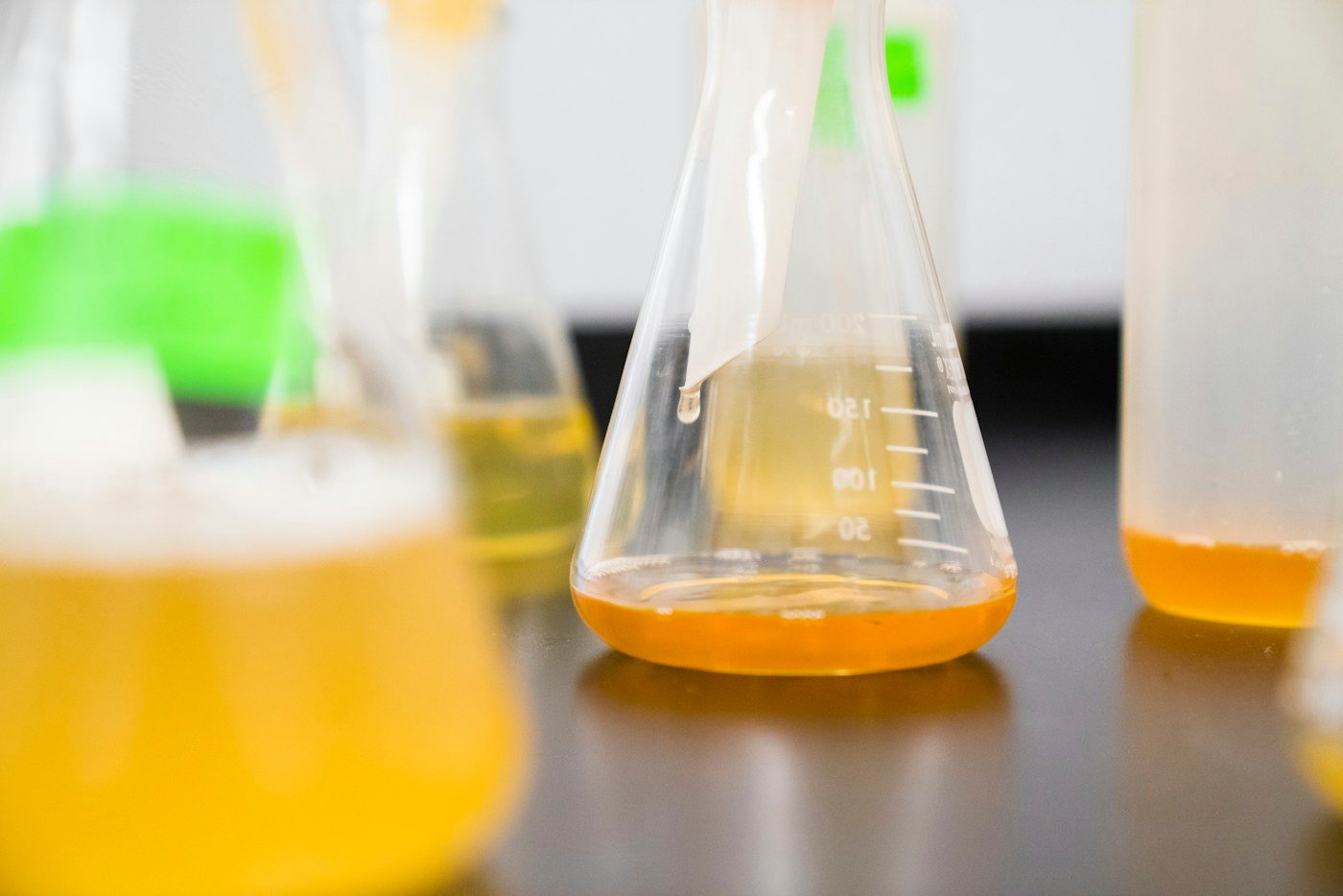
Distinguish mixtures from pure substances and identify whether a mixture is uniform. Connect separation methods to properties such as particle size, solubility, boiling point or magnetic behaviour. Ask why a method fits a particular mixture and what result should be expected. Use safe, teacher-approved examples only; never mix unknown substances or perform unsupervised experiments at home.
Practice method: Start with a worked example or short model. Ask the learner to explain the idea in their own words, then complete a similar task without looking at the solution. Review the result against the question and identify the reason for any error. A correction is useful when the student can apply the corrected approach to a fresh example rather than copy the answer. Increase difficulty only after the core method is clear.
Progress check: Record the skill practised, level of independence, recurring mistake and next step. Revisit the skill after a few days to check retention. This gives the tutor and family evidence of progress and helps future lessons target actual gaps rather than repeat activities already mastered. Keep a short list of questions to bring to the next session.
Elements, compounds and symbols

Use examples to distinguish elements, compounds and mixtures. Practise writing chemical symbols accurately, including capitalisation. Ask what a formula reveals about the types and relative numbers of atoms. Students should explain whether components are chemically combined and whether physical methods can separate them. Comparison tables help, but follow them with independent questions that test reasoning.
Practice method: Start with a worked example or short model. Ask the learner to explain the idea in their own words, then complete a similar task without looking at the solution. Review the result against the question and identify the reason for any error. A correction is useful when the student can apply the corrected approach to a fresh example rather than copy the answer. Increase difficulty only after the core method is clear.
Progress check: Record the skill practised, level of independence, recurring mistake and next step. Revisit the skill after a few days to check retention. This gives the tutor and family evidence of progress and helps future lessons target actual gaps rather than repeat activities already mastered. Keep a short list of questions to bring to the next session.
Atoms, molecules and formulas

Interpret formulas by counting atoms and reading subscripts carefully. If the syllabus includes valency or ions, introduce the required rules with examples and ask the learner to explain each step. Move from interpreting formulas to writing them only when the underlying rule is clear. Keep an error log for wrong symbols, missing subscripts and confusion between coefficients and subscripts.
Practice method: Start with a worked example or short model. Ask the learner to explain the idea in their own words, then complete a similar task without looking at the solution. Review the result against the question and identify the reason for any error. A correction is useful when the student can apply the corrected approach to a fresh example rather than copy the answer. Increase difficulty only after the core method is clear.
Progress check: Record the skill practised, level of independence, recurring mistake and next step. Revisit the skill after a few days to check retention. This gives the tutor and family evidence of progress and helps future lessons target actual gaps rather than repeat activities already mastered. Keep a short list of questions to bring to the next session.
Scientific laws and calculations
Where laws of chemical combination or conservation are included, connect the statement to a simple example. Ask what remains constant and why the example supports the principle. For calculations, list given values, show each step and check units. Students should define a law, paraphrase it accurately and apply it to a new question rather than memorise a sentence alone.
Practice method: Start with a worked example or short model. Ask the learner to explain the idea in their own words, then complete a similar task without looking at the solution. Review the result against the question and identify the reason for any error. A correction is useful when the student can apply the corrected approach to a fresh example rather than copy the answer. Increase difficulty only after the core method is clear.
Progress check: Record the skill practised, level of independence, recurring mistake and next step. Revisit the skill after a few days to check retention. This gives the tutor and family evidence of progress and helps future lessons target actual gaps rather than repeat activities already mastered. Keep a short list of questions to bring to the next session.
Practical skills and safety

For prescribed activities, record the aim, materials, method, observations and conclusion. Separate observations from explanations. Follow laboratory rules: never taste chemicals, inhale substances directly, mix unknown materials or perform unsupervised experiments at home. If an activity is unavailable, use teacher-approved resources or supplied data. Never invent results or claim an experiment was performed when it was not.
Practice method: Start with a worked example or short model. Ask the learner to explain the idea in their own words, then complete a similar task without looking at the solution. Review the result against the question and identify the reason for any error. A correction is useful when the student can apply the corrected approach to a fresh example rather than copy the answer. Increase difficulty only after the core method is clear.
Progress check: Record the skill practised, level of independence, recurring mistake and next step. Revisit the skill after a few days to check retention. This gives the tutor and family evidence of progress and helps future lessons target actual gaps rather than repeat activities already mastered. Keep a short list of questions to bring to the next session.
Definitions and answer writing

Build a glossary with each term, precise definition and example. Compare similar terms directly. Read the command word before answering: a definition is different from an explanation or comparison. Check symbols, subscripts and units. After feedback, rewrite a weak answer and apply the correction to a new question. This turns marking into useful practice.
Practice method: Start with a worked example or short model. Ask the learner to explain the idea in their own words, then complete a similar task without looking at the solution. Review the result against the question and identify the reason for any error. A correction is useful when the student can apply the corrected approach to a fresh example rather than copy the answer. Increase difficulty only after the core method is clear.
Progress check: Record the skill practised, level of independence, recurring mistake and next step. Revisit the skill after a few days to check retention. This gives the tutor and family evidence of progress and helps future lessons target actual gaps rather than repeat activities already mastered. Keep a short list of questions to bring to the next session.
Revision and online tutoring

Use short sessions for concept review, formula practice, diagram interpretation and self-testing. Classify errors as vocabulary, concept, formula, calculation or incomplete explanation. A tutor should ask the learner to explain a new example, not merely confirm understanding. For CBSE information, consult the official CBSE website. Explore The Infinity live learning platform and The Infinity Home Tuitions.
Practice method: Start with a worked example or short model. Ask the learner to explain the idea in their own words, then complete a similar task without looking at the solution. Review the result against the question and identify the reason for any error. A correction is useful when the student can apply the corrected approach to a fresh example rather than copy the answer. Increase difficulty only after the core method is clear.
Progress check: Record the skill practised, level of independence, recurring mistake and next step. Revisit the skill after a few days to check retention. This gives the tutor and family evidence of progress and helps future lessons target actual gaps rather than repeat activities already mastered. Keep a short list of questions to bring to the next session.
Revision checklist, FAQs and next steps
- Keep the current syllabus and textbook available.
- Write down questions that remain unclear during practice.
- Review errors and retry similar questions without notes.
- Practise regularly in short sessions instead of cramming.
- Agree on one measurable learning goal for the next lesson.
| Study area | Evidence of progress |
|---|---|
| Concepts | Explains ideas accurately in their own words |
| Practice | Completes new questions with less prompting |
| Revision | Corrects recurring mistakes and retains learning |
How often should students practise? Use manageable sessions that fit school workload. Can tutoring guarantee a particular grade? No responsible tutor can guarantee a result; outcomes depend on starting point, participation, practice and assessment requirements. Which syllabus should guide lessons? The prescribed course and school instructions should always take priority. For CBSE, consult the official CBSE website; other boards should use their official curriculum resources.
Explore The Infinity live learning or The Infinity Home Tuitions. A practical first step is to list three weak topics, gather related textbook questions and set a date to review progress.
How to make Chemistry revision more effective
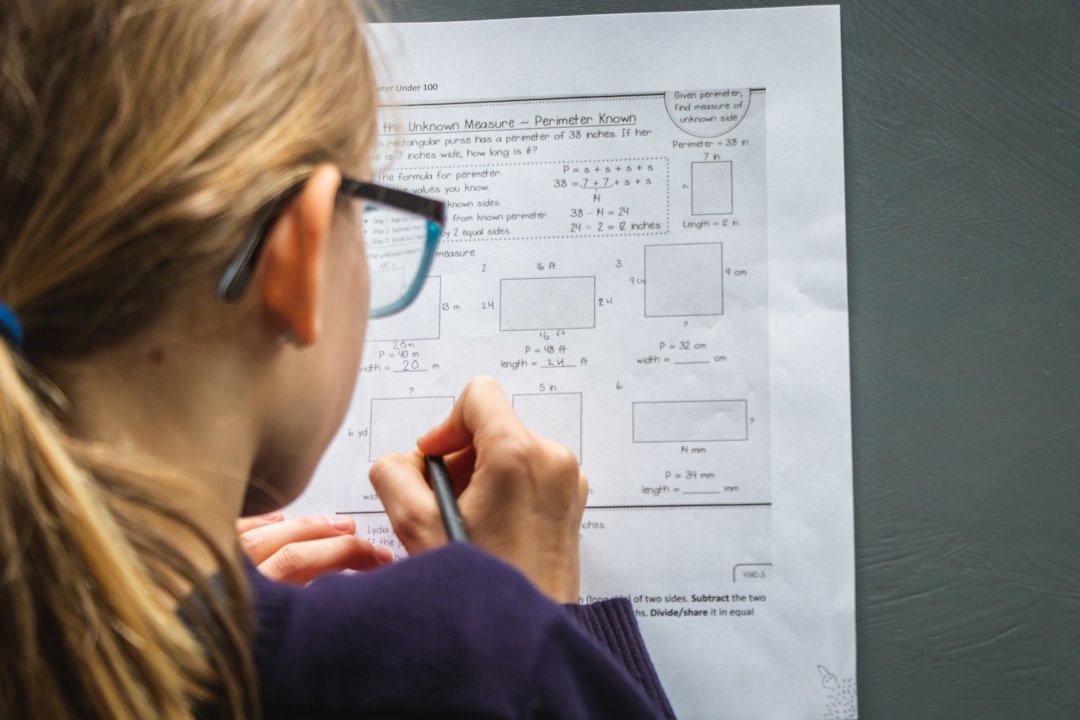
A strong revision session should test recall, application and explanation separately. First, close the textbook and write the main idea from memory. Next, solve a question that requires the idea to be used. Finally, explain why the answer is correct and identify any assumption or rule involved. This sequence reveals whether a learner can merely recognise a definition or can use it independently. Keep each session focused on one or two learning goals and record the questions that still cause difficulty. In the next lesson, begin with one of those questions to check whether the previous correction has lasted. Avoid copying long answers as the main form of study; use short notes, diagrams, retrieval questions and independent practice instead. Parents can support this routine by asking the learner to explain one concept, not by supplying the answer. If confusion persists, return to a simpler example and rebuild the reasoning step by step.
Use this approach alongside the school’s own assignments and feedback. Keep the routine realistic, review mistakes without blame and adjust the next task to the learner’s current level. A good tutor explains the reasoning, checks independent application and communicates the next learning goal clearly.