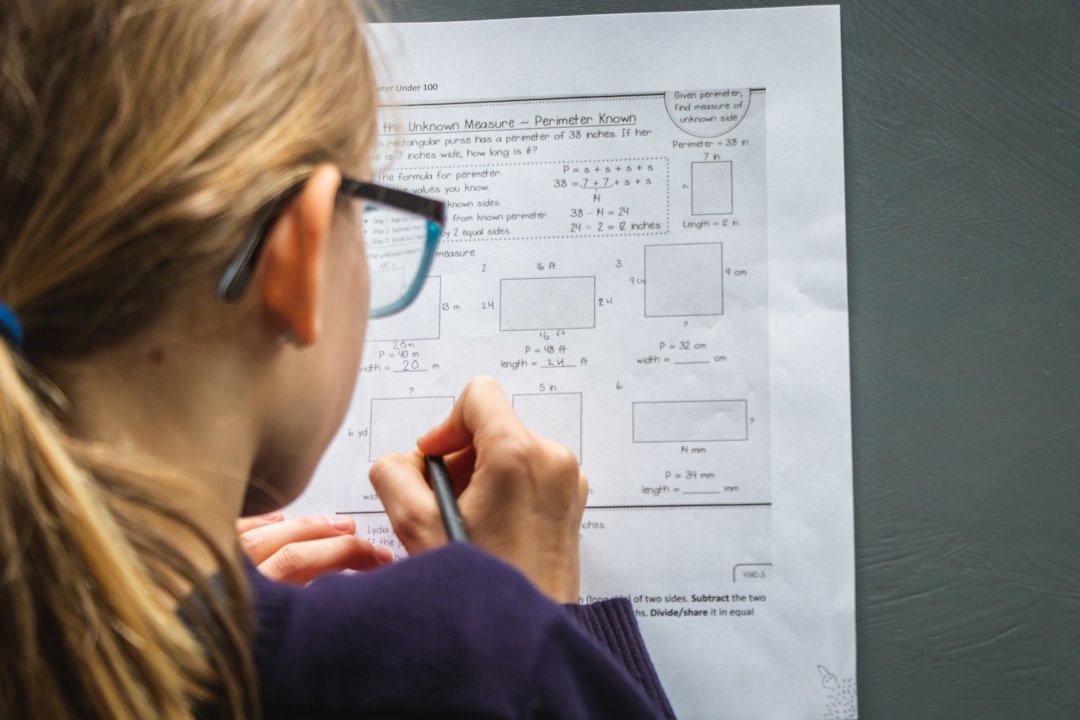
Home tutor study routine works best when tuition and self-study have clearly different but connected roles. The tutor explains, diagnoses and guides; the student practices, recalls, solves and reviews independently. The goal is not to maximize tuition hours but to improve independent academic performance.

This framework can be adapted for students in Chandigarh, Panchkula, Mohali, Zirakpur, Kharar and other areas, as well as students using live online tuition.
The Three-Part Study Cycle
A sustainable routine follows three stages:
- Learn: understand the concept with teacher guidance.
- Practise: solve questions without immediate help.
- Review: analyse mistakes and revisit weak areas.
Why Self-Study Must Continue After Tuition
A student may understand an explanation during a lesson but still struggle to reproduce the method alone. Independent practice reveals whether learning has actually transferred from guided instruction to student performance.
What to Do Before the Tuition Class

- Review the previous lesson briefly.
- Mark questions that could not be solved.
- Keep school homework and recent tests ready.
- List specific doubts instead of saying only “I don’t understand.”
- Identify the next topic or school deadline.
What Should Happen During Tuition?
The lesson should include explanation, questioning, guided practice and some independent work. The tutor should periodically ask the student to explain a method or solve a problem without prompts.
A Practical 60-Minute Structure
| Time | Activity |
|---|---|
| 5–10 min | Review and diagnostic questions |
| 15–20 min | New concept or difficult prerequisite |
| 15–20 min | Guided and independent questions |
| 5–10 min | Error correction and recap |
| 5 min | Homework and next target |
What to Do Immediately After Tuition
Within the same day, the student should attempt a short set of questions independently. This checks whether the explanation can be converted into actual problem solving.
How Much Self-Study Is Needed?
There is no single number of hours suitable for every student. The right amount depends on age, school workload, subject difficulty, examination schedule and concentration capacity. A shorter routine that is completed consistently is generally more useful than an unrealistic timetable.
Build a Weekly Study Routine
| Day | Suggested Focus | Student Output |
|---|---|---|
| School day | Homework + short recall | Completed school work |
| Tuition day | Concept + guided practice | Independent practice set |
| Next day | Recall + questions | Error corrections |
| Weekend | Revision + test | Test and error log |
How to Combine School Homework and Tuition Homework
Tuition work does not always need to become a second, separate homework load. Where appropriate, the tutor can use school assignments as application practice, then add targeted questions for the student’s weak areas.
Use an Error Log

Record the topic, mistake, correct method and date for rechecking. Common categories include concept errors, calculation mistakes, question interpretation, incomplete answers and time-management problems.
Subject-Wise Self-Study After Tuition
Maths
Re-solve selected questions without looking at the tutor’s method. Then attempt a few unfamiliar problems.
Science
Recall concepts, practise diagrams and solve application questions or numericals as appropriate.
Physics
Write the known quantities, identify the governing principle, derive the required relation where necessary and check units after solving.
Chemistry
Review equations and concepts, then practise numerical, reaction or reasoning questions depending on the chapter.
Biology
Use retrieval practice for terminology and processes, then redraw important diagrams without copying.
English
Practise grammar, comprehension and writing tasks rather than only rereading literature notes.
Accountancy and Economics
Practise formats, calculations, concepts, diagrams and structured answers independently.
Class 1–5 Study Routine
Keep sessions short and focused. Prioritize reading, writing, numeracy, basic concepts and homework habits. Avoid turning the entire evening into tuition and worksheets.
Class 6–8 Study Routine
Build a repeatable cycle of school work, tuition, independent practice and weekly revision. Focus on foundational concepts that will matter in secondary classes.
Class 9–10 Study Routine
Increase written practice and testing. Students should regularly solve questions without notes and review mistakes, especially in Mathematics and Science.
Class 11–12 Study Routine
Use subject-specific schedules. Senior students may need separate blocks for board preparation, revision, problem solving and competitive-exam foundation such as JEE or NEET.
Weak Students: How the Routine Should Change
Start with prerequisite gaps rather than rushing through new chapters. Use smaller practice sets, frequent feedback and repeated retrieval. Increase difficulty gradually as accuracy improves.
Average Students: How to Move Beyond Basic Completion
Once routine homework is under control, add mixed questions, timed practice and deliberate work on recurring errors.
High-Performing Students: How to Add Challenge
Use higher-order questions, unfamiliar applications, timed sets and deeper revision. The objective is to develop flexibility rather than simply completing more worksheets.
How Parents Should Support the Routine
Parents can protect a consistent study environment, help maintain the timetable and review progress periodically. Constantly checking every question can reduce independence.
What Parents Should Track Weekly
- Topics completed
- Questions attempted independently
- Test score and accuracy
- Repeated errors
- Homework completion
- Topics still requiring tutor support
Monthly Progress Review
| Indicator | Question to Ask |
|---|---|
| Concepts | Can the student explain the topic without prompts? |
| Accuracy | Are recurring errors declining? |
| Independence | Does the student start and solve work alone? |
| Time | Is the student completing expected work within the available time? |
| Retention | Can older topics still be recalled? |
When More Tuition Hours May Not Be the Answer
If a student receives many lessons but does little independent practice, adding more tuition may not solve the underlying issue. The better intervention may be a shorter teaching session followed by structured self-practice and feedback.
Home Tuition Scheduling in Chandigarh, Panchkula and Mohali
For local home tuition, build the schedule around school hours, travel, extracurricular activities, meals, sleep and independent study. Consistency is more important than filling every available evening.
Online One-to-One Tuition as an Alternative
Live online tuition can be useful when local tutor availability or travel makes a home schedule difficult. The same learn-practise-review cycle should still be followed.
Common Routine Mistakes
- Studying only when exams are near.
- Counting tuition hours as self-study.
- Doing every question with the tutor.
- Skipping error review.
- Creating an unrealistic daily timetable.
- Ignoring sleep and recovery.
- Using too many resources at once.
How to Know the Routine Is Working
Look for observable changes: fewer repeated mistakes, stronger independent problem solving, better retention, improved completion time and less dependence on prompts. A single higher test score is useful but should not be the only measure.
How The Infinity Home Tuitions Can Help
The Infinity Home Tuitions provides personalised home tuition and live online learning support, subject to tutor availability. The routine can be aligned with class, subject, board, school workload and the student’s academic goals.
Related Resources
- Home Tuition Timetable: How Many Days and Hours?
- Home Tutor in Peer Muchalla and Dhakoli
- Home Tutor in Panchkula
- Home Tutor in Chandigarh
- Home Tuition in Panchkula, Chandigarh and Mohali
- Home Tutor vs Online Tuition vs Coaching Centre
- Maths Home Tutor: Conceptual Gaps
- Home Tuition for Weak Students
Frequently Asked Questions
Should a student study after every tuition class?
Yes, a short independent practice session is useful because it checks whether the student can apply the lesson without immediate assistance.
Is two hours of tuition better than one hour?
Not automatically. Lesson duration should match concentration, subject difficulty and the amount of independent practice available.
How many hours should a student self-study?
There is no universal number. Consider class, school workload, subject difficulty, examination schedule and the student’s capacity to concentrate.
What should a student do before tuition?
Review the previous lesson, bring doubts and keep recent school work or tests available.
How can parents monitor self-study?
Track outputs such as completed work, test performance and recurring errors rather than supervising every minute.
Should tuition homework replace school homework?
Not necessarily. A tutor can often integrate school assignments into the learning plan and add only targeted practice.
Is this routine suitable for online tuition?
Yes. The same learn-practise-review framework works with live online one-to-one classes.
When should the routine be changed?
Review it when school workload, examination dates, subject difficulty or the student’s performance changes significantly.
Final Weekly Checklist
- Review previous learning.
- Prepare doubts before tuition.
- Use tuition for explanation and guided practice.
- Complete independent practice afterward.
- Record important mistakes.
- Revise older topics.
- Take a weekly test or timed practice set.
- Review progress and adjust the next week’s targets.
Need a home tutor or online tuition plan? Contact The Infinity Home Tuitions at +91-8872180500.