Looking for an online Punjabi tutor for Class 6? This guide explains how families can organise syllabus-aligned lessons, strengthen foundations and help students prepare for school assessments. The best plan follows the learner’s actual textbook, board and school expectations.
A clear starting point for Class 6

Class 6 is a transition to more organised subject learning. Students meet new vocabulary, longer explanations and tasks that require them to connect ideas rather than simply repeat facts. A sound tuition plan starts with the learner’s actual school textbook, board, syllabus and recent classwork. The tutor should ask which chapters are being taught, what the teacher expects in written answers and which skills feel difficult. This avoids assuming that every school follows the same sequence and ensures that support complements classroom instruction.
Understand the school syllabus first

Depending on the board and school, the course may include ਪੜ੍ਹਨ ਦੀ ਸਮਝ, ਸ਼ਬਦ-ਭੰਡਾਰ, ਲਗਾਂ-ਮਾਤਰਾਂ, ਵਿਆਕਰਨ, ਲਿੰਗ, ਵਚਨ, ਵਾਕ-ਰਚਨਾ, ਲੇਖ ਅਤੇ ਕਵਿਤਾ. This is a broad learning map, not a universal syllabus. The school textbook and current term plan should decide which concepts are essential. For every chapter, note the key terms, learning outcomes, examples, diagrams or methods, and likely question types. Break large units into smaller goals and mark each as introduced, practised or revised. A simple tracker helps parents and tutors identify gaps without overwhelming the learner with an unrealistic list.
- Read the relevant school chapter and mark unfamiliar terms.
- Explain one key idea in your own words.
- Complete a short independent task and review any errors.
Build concepts step by step

Start each new concept with a familiar example. The tutor can explain the idea, demonstrate one task, solve another with the student and then ask the learner to try independently. Encourage the child to explain why an answer or method makes sense. This reveals whether the learner understands the process or is copying a pattern. When confusion appears, use a simpler example, a drawing, a comparison or a short verbal explanation before returning to the textbook question.
How personalised online tuition works
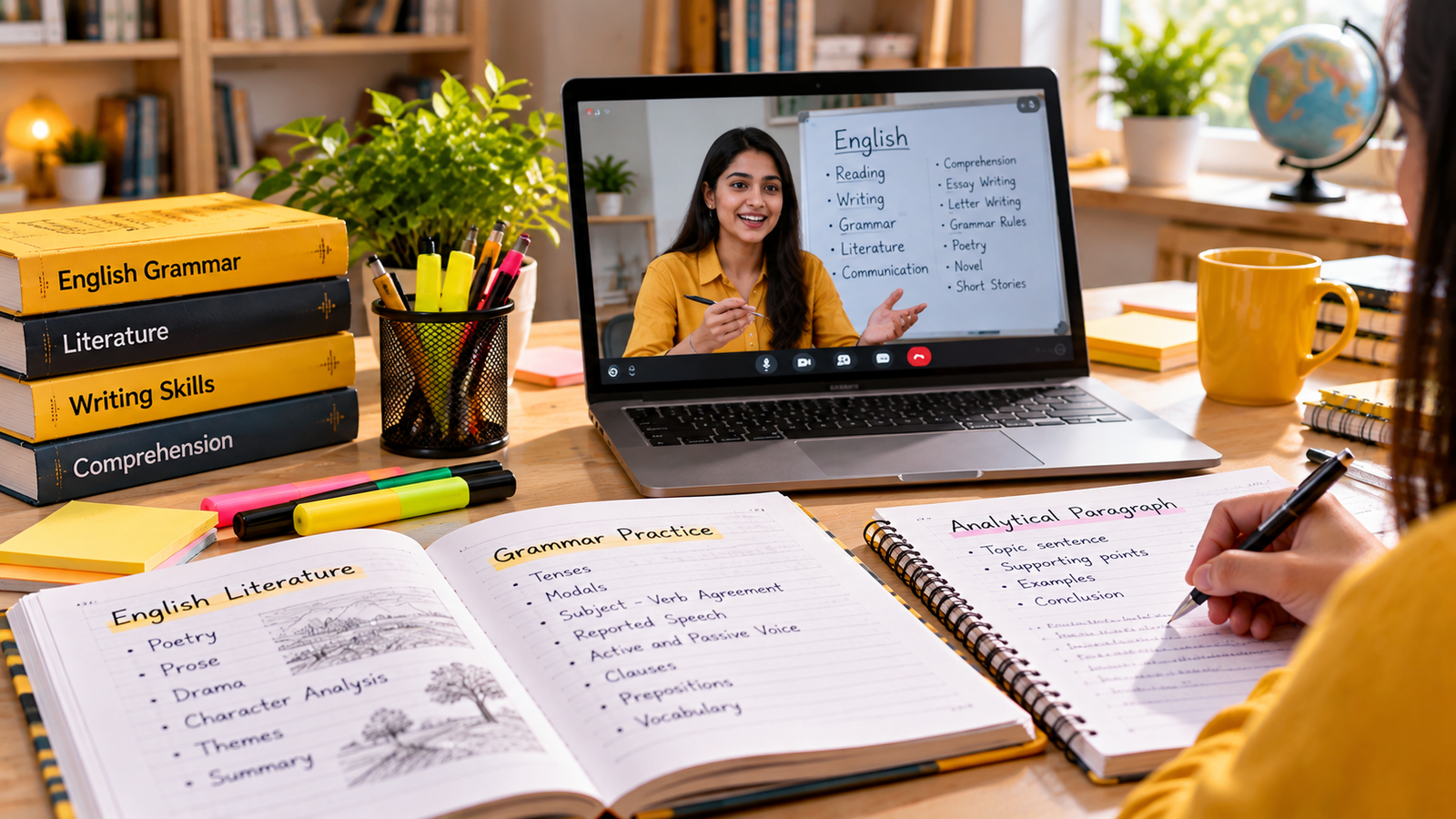
One-to-one online tuition can provide a pace suited to the student’s current understanding. A tutor may use a digital whiteboard, annotate a passage, show a diagram, share a worksheet or ask the learner to demonstrate a method. The student should keep the prescribed textbook and notebook nearby and join from a quiet space with a reliable connection. The session should be active: the learner asks questions, attempts tasks and receives feedback, rather than watching a long lecture without participation.
Subject practice that develops understanding

Practice works best when it progresses from recall to guided work and then independent application. For Punjabi, practise areas such as ਪੜ੍ਹਨ ਦੀ ਸਮਝ, ਸ਼ਬਦ-ਭੰਡਾਰ, ਲਗਾਂ-ਮਾਤਰਾਂ, ਵਿਆਕਰਨ, ਲਿੰਗ, ਵਚਨ, ਵਾਕ-ਰਚਨਾ, ਲੇਖ ਅਤੇ ਕਵਿਤਾ. Choose a small number of varied questions instead of repeating dozens of identical examples. Keep an error notebook with the question, the reason for the mistake and the corrected approach. Revisit similar tasks after a short interval. Being able to complete a question without hints and explain the reasoning is a stronger sign of learning than copying a correct solution.
- Read the relevant school chapter and mark unfamiliar terms.
- Explain one key idea in your own words.
- Complete a short independent task and review any errors.
Identify learning gaps early
Many Class 6 difficulties are caused by small gaps: unfamiliar vocabulary, a missed instruction, a weak prerequisite skill or rushing through the question. More homework alone may not solve the problem. The tutor should observe how the learner begins a task, ask them to think aloud and identify the exact step where confusion starts. Re-teach that step with a smaller example, then gradually return to the full question. Feedback should be specific and encouraging.
A balanced weekly study routine

A realistic weekly routine may include two or three short practice blocks, one live lesson on a current school topic and one brief review of earlier learning. Try 10 minutes of recall, 20 minutes of focused work and 5 minutes to write down doubts. Adjust the routine around school, rest and activities. Consistency matters more than long sessions. The aim is to build a habit the child can maintain independently, not to fill every evening with tuition.
Homework that builds independence

Homework should show what the student can do independently. After a lesson, set a small and purposeful task. The learner should attempt it before checking notes, mark any uncertain answers and bring those doubts to the next class. Parents can help by providing a calm study space and asking the child to explain what was learned, but should avoid completing the work on the child’s behalf. Independent attempts give the tutor a more accurate view of progress.
Revision strategies for long-term recall

Use spaced revision: review a topic briefly the next day, revisit it a few days later and return to it before a test. Make a short summary containing key terms, rules, steps, examples or diagrams. Close the book and explain the idea from memory before checking what was missed. Flashcards can help with vocabulary and definitions, while mixed practice helps learners choose the right method without being told which chapter to use. Keep revision short enough to repeat regularly.
- Read the relevant school chapter and mark unfamiliar terms.
- Explain one key idea in your own words.
- Complete a short independent task and review any errors.
Prepare for school tests and assessments
Assessment skills include reading the full question, noticing command words and presenting the answer clearly. Students should understand whether they are being asked to name, describe, compare, explain or calculate. Follow the teacher’s directions about showing working, labelling diagrams, writing complete sentences or using units. Leave time to check the final response and confirm that every part has been answered. Use school worksheets and marking guidance where available so practice reflects classroom expectations.
How parents can support progress

Parents can support learning by sharing the syllabus, recent worksheets and teacher feedback with the tutor. Ask for clear updates: what can the child now do independently, which error appears repeatedly and what should be practised next? Avoid comparing the learner with classmates or treating mistakes as a failure. Small, observable goals—such as explaining a term, showing working or checking an answer—help build confidence. Keep communication practical and focused on the child’s learning.
What to look for in an online tutor

Choose a tutor who understands the subject, communicates patiently and adapts explanations to the student’s age and school requirements. Ask how they diagnose gaps, check understanding and report progress. A trial class can show whether the child feels comfortable asking questions and whether the tutor gives enough time for independent attempts. Be cautious of guaranteed marks or rank promises: progress depends on attendance, practice, school expectations and the learner’s starting point.
Help students ask better questions

Students should be encouraged to ask precise questions: “Can you show another example?”, “Why does this step work?”, “What does this word mean in the question?” and “Can I explain the answer back to you?” These questions make lessons more interactive. If an explanation is unclear, the tutor should try a different representation rather than simply repeating the same words. Learning how to ask for help is an important part of becoming an independent student.
A monthly learning review

At the end of each month, review a few representative tasks and check whether the learner can recall the main ideas, complete questions independently and explain common mistakes. Select work from different parts of the current syllabus, not only the easiest chapter. Compare progress with the student’s earlier work and teacher expectations. If a skill remains difficult, return to its prerequisite and adjust the next month’s plan. A short review is more useful than a large test without follow-up.
- Read the relevant school chapter and mark unfamiliar terms.
- Explain one key idea in your own words.
- Complete a short independent task and review any errors.
Use textbooks and reliable resources

The school textbook, class notes, teacher worksheets and official curriculum guidance should remain the primary references. Additional resources can provide another explanation or more practice, but they should not replace the prescribed course or introduce unverified information. For CBSE-related guidance, families can consult the official CBSE website at https://www.cbse.gov.in/ and confirm class-specific requirements with the school. The tutor should clearly distinguish required classroom content from optional enrichment.
Track progress with clear evidence

Track progress with observable notes: topics covered, practice completed, tasks solved without prompts and the next learning goal. Avoid labels such as “weak” or “brilliant.” More useful feedback is “can explain the concept but needs to check the final answer” or “can solve familiar questions and is practising unfamiliar examples.” This helps the student understand what to do next and gives parents meaningful information without making every session feel like an examination.
Frequently asked questions

Is online tuition right for every learner? It can work well when lessons are interactive and the student has a suitable device, internet connection and quiet space; some children may prefer in-person support. How many lessons are needed? This depends on the learner’s goals, current understanding and school workload. Should tuition replace school learning? No, it should reinforce classroom teaching and build independence. Can the plan change? Yes, it should adapt as school topics and the learner’s needs change.
Start a structured learning plan

Begin with one current chapter and one foundational skill that needs attention. Share the school syllabus, a recent worksheet and the student’s goals with The Infinity Home Tuitions. Discuss the subject, timetable and lesson format before starting. Explore The Infinity live learning platform or visit The Infinity Home Tuitions website. The goal is clear explanation, guided practice and growing independence—not a guarantee of a particular mark.
Plan a lesson around one clear outcome

A focused lesson starts with one achievable outcome, such as explaining a concept, completing a type of question or using a skill accurately. Begin with a short recap and a starter task to see what the student remembers. Model the process in manageable steps, invite the learner to practise with guidance and finish with an independent attempt. The tutor should note what the student could do without prompts and use that evidence to plan the next session. This prevents lessons from becoming a series of disconnected explanations.
Strengthen vocabulary and instructions

Students need to understand the vocabulary used in textbooks and questions. Create a small glossary containing the term, a simple definition and an example. Practise command words such as identify, describe, compare, explain and justify. Ask the learner to underline important information in a question and restate the task in their own words before answering. These habits reduce avoidable mistakes and improve both written responses and classroom participation.
Use worked examples effectively
A worked example should make the thinking visible, not just show the final answer. The tutor can explain each decision, complete a second example with the learner and then ask for an independent attempt. Gradually reduce prompts as confidence grows. If the learner makes an error, ask them to locate the step where their reasoning changed. Correcting the process is more useful than simply giving the right answer.
Practise retrieval and spaced revision

Retrieval practice means trying to recall information before looking at notes. Spaced revision means returning to a topic over several days rather than studying it once. Ask the learner to summarise a concept from memory, answer a few short questions and then check the textbook for missing points. Repeat the process after a delay. Keep revision brief and regular so that it fits alongside schoolwork and rest.
Build a useful error log

An error log should record the question, the type of mistake, why it happened and the corrected method. Review it before a new practice set and choose one recurring error to address. Avoid copying every wrong answer without reflection. The student should explain what they will do differently next time, such as reading the instruction twice, checking a calculation or using a key term accurately. This turns mistakes into actionable learning information.
Make homework manageable
Homework should be short enough for the learner to complete independently and carefully. Select a few representative tasks rather than assigning a large number of repetitive questions. The student should attempt each task before checking notes, mark uncertainties and bring doubts to the next lesson. Parents can provide a quiet space and a predictable time, but should avoid completing the work. Independent effort gives the tutor a realistic view of progress.
Use feedback to set the next goal

Useful feedback describes an action the student can take. Instead of saying “improve your work,” explain whether the learner needs to show a step, define a term, label a diagram or check a final response. Agree on one small goal for the next week and review it in the next lesson. Clear feedback helps students understand how to improve without feeling that every mistake is a judgement about ability.
Coordinate tuition with school learning

Tuition should reinforce classroom learning, not compete with it. Share the current syllabus, class notes, worksheets and teacher feedback with the tutor. Confirm which topics are required for the current term and which are optional enrichment. If the school changes the pace or assessment format, adjust the tuition plan. This coordination helps the learner practise the right material and prevents unnecessary repetition or gaps.
Develop active recall between lessons

After a lesson, close the textbook and ask the student to write or explain three important points from memory. They can then reopen the book, correct omissions and add one example. This short routine shows what has been retained and what needs another explanation. Repeat the recall activity after a day or two, changing the question slightly so that the learner applies the idea rather than memorising one exact response. Keep the task brief and supportive; it should build confidence and reveal next steps, not become another high-pressure test.
Create a home learning checklist

A simple checklist can make home practice easier to manage. Include the current chapter, the small task to complete, the materials needed and a box to mark when the student has checked their work. Review the checklist with the tutor once a week and remove tasks that are no longer relevant. Parents can help the learner choose a regular time and prepare the study space. The checklist should remain flexible and realistic, leaving time for rest, play and other responsibilities.